Darknet Markets 2026:
The dark web is part of the deep web but is built on darknets: overlay networks that sit on the internet but which can't be accessed without special tools or software like Tor. Tor is an anonymizing software tool that stands for The Onion Router — you can use the Tor network via Tor Browser.
| Darknet Market | Established | Total Listings | Link |
|---|---|---|---|
| TorZon Market | 2022 | 140+ | Onion Link |
| Nexus Market | 2024 | 600+ | Onion Link |
| Abacus Market | 2022 | 100+ | Onion Link |
| Ares | 2026 | 100+ | Onion Link |
| Cocorico | 2023 | 110+ | Onion Link |
Updated 2026-07-28
How the Darknet Built a Better Drug Market
The evolution of darknet commerce demonstrates how digital systems can create more secure and efficient markets. Traditional street-level drug trade is inherently risky, relying on anonymity and cash. Dark websites transformed this model by integrating three core technological pillars: encryption, escrow services, and a transparent user feedback system.
Encryption tools like PGP protect all communication and transaction details. This ensures privacy for both buyer and vendor, making interactions confidential and secure from interception. It replaces the need for physical meetings, reducing personal risk.
The payment problem was solved by adopting cryptocurrencies like Bitcoin. These allow for pseudonymous, borderless transactions. However, the real innovation was the implementation of multisignature escrow. In this system, funds are held by the platform until the buyer confirms receipt and quality of the product. This mechanism disincentivizes fraud, as vendors only receive payment after fulfilling their part of the agreement.
User reviews and rating systems provide a layer of quality control previously absent. Every transaction can be publicly evaluated, creating a powerful reputation economy. Vendors with consistently high ratings and positive feedback gain more business, while those who scam or provide poor products are quickly identified and boycotted. This community-driven oversight fosters a surprising level of trust and reliability.
Together, these features created a self-regulating marketplace. The result was a notable increase in transactional safety and product consistency for participants. The market dynamics began to mirror those of legitimate e-commerce, where trust and efficiency are paramount for success.
How Encryption Builds Safer Darknet Markets
The foundational innovation of darknet commerce is its systematic application of encryption. This technology transforms private communication and transaction data into an unreadable format, accessible only to the intended recipient with the correct key. For participants, this creates a de facto shield of privacy, separating their identity from their commercial activity. The direct result is a significant reduction in the social and legal risks traditionally associated with such transactions, enabling a focus on purely commercial considerations like product quality and vendor reliability.
This encrypted environment facilitated the development of a structured marketplace with built-in mechanisms for trust and safety, absent in conventional street-level trade. The integration of escrow services was a direct response to the inherent risk of remote transactions. By holding a buyer's cryptocurrency in a secure, third-party account until the product is delivered and confirmed, the system neutralizes the threat of fraud from either party. This mechanism enforces a form of contractual honesty, as funds are only released upon the satisfactory completion of the deal.
Concurrently, the user review system emerged as a powerful self-regulating force. Buyers publicly document their experiences with specific vendors and product batches, creating a transparent and persistent record of performance. This archive of crowd-sourced data performs several critical functions:
- It identifies consistent and high-quality vendors, allowing them to build a valuable reputation.
- It exposes scams or poor-quality products, effectively marginalizing bad actors.
- It provides detailed consumer information on purity, shipping speed, and stealth, elevating the overall standard of service.
The combination of these three elementsencryption for privacy, escrow for transactional security, and reviews for quality assurancecreated a more efficient and reliable commercial ecosystem. The darknet drug trade, as a result, evolved from a high-risk, interpersonal activity into a digitally-mediated market where reduced risk, reliable information, and consumer choice became the primary drivers of economic interaction.
How Crypto Payments Work on the Darknet
The adoption of cryptocurrency, primarily Bitcoin and later privacy-focused coins like Monero, provided the financial architecture necessary for darknet commerce to operate. This system solved the fundamental problem of trustless value transfer across borders without relying on traditional financial institutions. Transactions are pseudonymous, irreversible, and global, which aligns perfectly with the operational needs of the darknet.
This payment method integrates directly with other trust-building mechanisms. Funds for a transaction are typically held in a platform-managed escrow service. The buyer sends cryptocurrency to this escrow, which the seller cannot access until the buyer confirms receipt of the goods. This prevents simple fraud. The irreversible nature of crypto payments also means a seller cannot issue a fraudulent chargeback after receiving funds, protecting vendors.
The entire cycle is validated by the user feedback system. A successful transaction, enabled by cryptocurrency and secured by escrow, concludes with a review. This review, often detailing product quality and shipping speed, becomes a permanent, public record of vendor performance. High-rated vendors attract more business, creating a direct financial incentive for honesty and quality. Thus, cryptocurrency is not just a payment tool but the settlement layer that makes the self-regulating market possible, turning reputation into a tangible economic asset.

How Reviews Make Buying Safer
User feedback systems on darknet markets function as a decentralized reputation mechanism. Every transaction can culminate in a public review and rating, creating a permanent record of a vendor's reliability and product quality. This transforms anonymous commerce into a system grounded in verifiable performance.
The structure is straightforward. A buyer receives a product and leaves feedback detailing:
- The accuracy of the product description.
- The speed and discretion of shipping.
- The purity or effectiveness of the product itself.
This collective intelligence mitigates risk. New buyers can audit a vendor's history before committing funds, while vendors with consistently positive reviews gain a competitive advantage. The system creates economic incentives for honest dealing, as poor reviews or scams lead to a rapid loss of business. Feedback is further validated by its integration with the escrow service. A review can only be posted after a transaction is finalized, preventing fraudulent feedback from non-purchasers.
Consequently, the market becomes self-policing. Trust is not assumed but is earned and displayed quantitatively, fostering a more predictable and efficient trading environment where reliable vendors thrive.
How Escrow Makes Darknet Trading Safer
The escrow system is a foundational mechanism for trust on dark websites. It functions as a neutral third-party service that holds a buyer's cryptocurrency payment until the ordered goods are received and confirmed. This simple technical solution directly addresses the core problem of anonymous trade: the inherent risk of one party not fulfilling their obligation.
When a purchase is made, funds are locked in escrow. They are only released to the vendor after the buyer marks the order as finalized. This creates a powerful incentive for honest conduct. Vendors are motivated to ship quality products promptly, as their payment is contingent on buyer satisfaction. Conversely, buyers cannot falsely claim non-receipt to receive both goods and a refund, as most platforms require proof for dispute resolution. The system transforms a potentially risky transaction into a self-enforcing agreement.
Dispute resolution is an integral feature. If a package fails to arrive or the product is substandard, the buyer can open a dispute. A marketplace moderator, often a trusted and experienced user, then reviews evidence from both partiessuch as shipping proof or product photosbefore adjudicating the release of escrow funds. This process introduces a layer of accountability and peer arbitration that is absent in traditional street-level drug markets. The efficiency gains are significant: transaction security is managed algorithmically and socially, reducing the need for interpersonal violence as enforcement. The market becomes more stable and predictable, fostering repeat business and economic growth within the darknet ecosystem.
How the Darknet's Drug Trade Regulates Itself
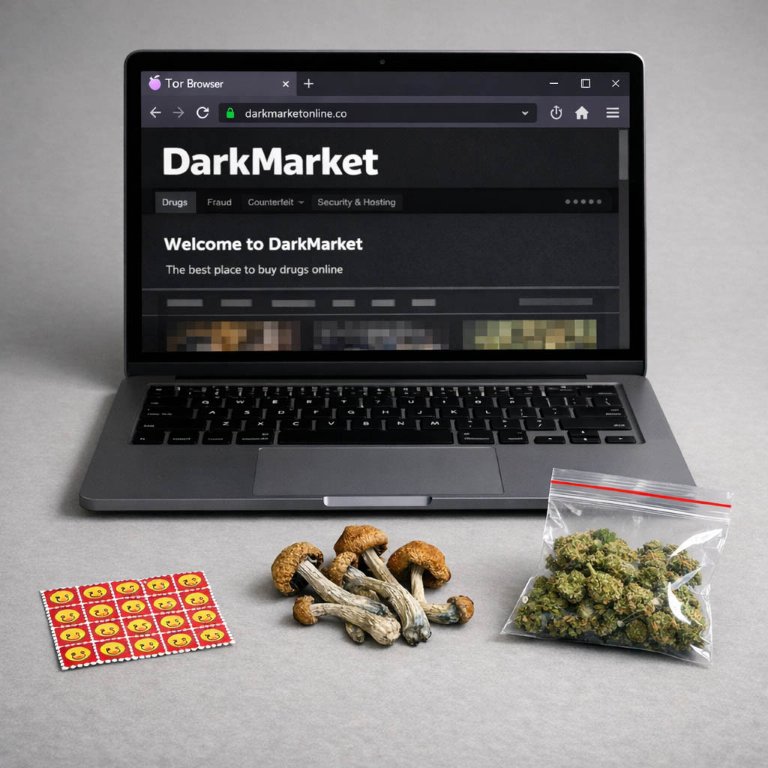
The darknet's drug trade operates on a principle of decentralized trust. Traditional illicit markets rely on personal connections and physical intimidation for enforcement. In contrast, dark websites engineered a self-regulating ecosystem where technology enforces fairness and quality. This system is built on three integrated pillars: encryption, escrow, and user reviews.
End-to-end encryption provides the foundational layer of security. It allows buyers and sellers to communicate and transact with a degree of privacy previously unavailable. This security fosters open participation and reduces the risk of external interference, creating a stable environment for commerce to develop its own internal rules.
The escrow service acts as the system's neutral arbitrator. When a purchase is made, the buyer's cryptocurrency is held by the marketplace until the product is received and confirmed. This mechanism directly addresses the core problem of trust in anonymous transactions. It incentivizes honest behavior from sellers, as they only receive payment upon successful delivery, and protects buyers from fraud.
Detailed user feedback creates a transparent reputation system. After a transaction, buyers leave reviews on product quality, shipping speed, and stealth. This public record is permanent and searchable. A seller with consistently positive reviews attracts more business, while one with poor feedback loses standing. This peer-driven accountability continuously filters out bad actors and rewards reliable vendors, creating a market where quality and service are paramount.
Together, these components form a closed loop of regulation. Encryption enables secure interaction, escrow ensures transactional integrity, and reviews maintain quality control. The result is a market that efficiently matches supply with demand, reduces transactional conflict, and has demonstrably increased the reliability and consistency of the goods offered compared to traditional street-level drug trade.
How the Darknet Makes Drug Markets Efficient
The darknet's drug economy operates on classic economic principles, but its digital infrastructure has refined their application. Supply and demand find a near-frictionless marketplace, mediated by technologies that reduce traditional risks and inefficiencies.
Encryption is the foundational layer. It protects the identities of both buyers and sellers, creating a secure environment for the transaction itself. This security expands the potential market by lowering the entry barrier for risk-averse participants, effectively increasing demand. Simultaneously, it allows suppliers to operate with reduced operational security concerns, potentially increasing the variety and consistency of supply.
The mechanism of escrow directly addresses the trust deficit inherent in illegal trade. Funds are held by a neutral third-party system until the buyer confirms receipt and quality of the product. This aligns incentives correctly:
- Sellers are motivated to ship products reliably to receive payment.
- Buyers can transact with confidence, knowing payment is only released upon satisfaction.
User feedback and reviews create a powerful reputation system that guides market dynamics. They provide transparent, crowd-sourced quality control, allowing high-quality vendors to flourish and poor-quality ones to fail. This feedback loop:
- Drives suppliers to compete on product quality and service, not just price.
- Enables buyers to make informed purchasing decisions, reducing information asymmetry.
Together, these elements create a resilient ecosystem. The digital nature of the darknet allows for rapid price discovery and product comparison, while encryption, escrow, and reviews mitigate the risks that typically plague offline illicit markets. This structure has led to a commercial environment where transactional efficiency and consumer choice are notably high, demonstrating how digital tools can organize even complex, trust-dependent exchanges.
How the Darknet Makes Drug Trade Efficient and Safe
The digital drug trade on darknet markets operates with a remarkable efficiency that traditional street-level commerce cannot match. This efficiency stems from a self-regulating ecosystem built on three core technological pillars: encryption, escrow, and user feedback.
Encryption provides the foundational layer of security and privacy. It allows buyers and sellers to communicate and transact without exposing their identities or locations. This reduces the risk of personal violence or theft that is common in physical drug deals, creating a safer environment for commerce. The use of cryptocurrency like Bitcoin or Monero complements this by enabling fast, borderless, and pseudonymous payments, removing the inefficiencies and dangers of cash exchanges.
The system is further stabilized by the implementation of escrow services. Funds from a purchase are held by the market's automated system until the buyer confirms receipt and quality of the product. This mechanism effectively eliminates the risk of one party defrauding the other, enforcing honest behavior without the need for a trusted third party. It directly addresses the fundamental issue of trust in anonymous transactions.
User reviews and rating systems act as the continuous quality control and reputation engine. Every completed transaction can be rated, creating a transparent record of a seller's reliability and product quality. This creates powerful economic incentives:
- Sellers with high ratings and positive reviews gain more business and can command premium prices.
- Sellers who provide poor quality products or fail to deliver are quickly identified and driven out of the market by negative feedback.
This combination creates a self-reinforcing cycle. Encryption enables safe participation, escrow enforces transactional integrity, and user reviews cultivate trust and quality. The result is a streamlined marketplace where supply and demand operate with minimal friction. Buyers can easily compare products and vendors based on detailed feedback, leading to more informed purchasing decisions and consistent product standards. The logistical efficiency of digital distribution, often using standard postal services, reduces overhead costs and expands market reach far beyond any local street corner, demonstrating a significant evolution in the structure of commerce.